How to Choose the Best Bitcoin Casino in Canada: A 2026 Guide to Safe Crypto Gambling

I've been playing online casinos in Canada for years now, and watching crypto completely change the game has been wild. By 2026, bitcoin casinos aren't just some niche thing anymore—they're legit alternatives that a lot of Canadian players are switching to. Fast transactions, better privacy, no conversion fees eating into your balance. It makes sense.
But here's what I learned the hard way: bitcoin casinos aren't all built the same. Some are solid. Others? They're traps waiting for players who don't know what to look for. I've made mistakes, lost money to sketchy operators, and spent way too much time figuring out which platforms are actually safe. That's why I'm writing this—so you don't have to learn these lessons the expensive way I did.
The Canadian crypto casino scene in 2026 is bigger and more complex than ever. Whether you've been gambling for years and you're curious about crypto, or you're completely new to both worlds, knowing what separates the good from the garbage is crucial.
Understanding Bitcoin Casinos and Their Appeal in Canada
A bitcoin casino works differently than the traditional online casinos most of us grew up with. Instead of depositing CAD through your credit card or Interac, you're using cryptocurrency—Bitcoin mostly, but also Ethereum, Litecoin, and others—to fund your account and cash out winnings.
For Canadian players, the benefits are real. Speed is the big one. Traditional casinos? Three to seven business days for withdrawals, especially when they're converting currencies and dealing with international banks. Bitcoin casinos can process your withdrawal in hours. Sometimes minutes. I've experienced both, and once you've had instant access to your winnings, going back to week-long waits feels absurd.
Privacy matters too. You'll still need to verify your identity at reputable casinos (I'll get to that), but crypto transactions don't expose your banking details or credit card info to the casino. You're transacting with wallet addresses—there's an extra layer of separation between your personal finances and your gambling activity.
Then there's currency conversion. As Canadians, we're constantly watching exchange rates chip away at our deposits when we play at international casinos. Bitcoin eliminates that entirely. You're playing in a global currency that doesn't care about borders. No more losing 5% of your deposit to conversion fees before you even place a bet.
The legal side in 2026 exists in what I call a 'functional grey area.' We've got access to international bitcoin casino platforms that aren't explicitly illegal to use, but they're not regulated by Canadian provincial authorities either. Some provinces—Ontario especially—have started exploring how crypto fits into their regulated markets. It's complicated, and you need to understand where these platforms actually stand before you deposit anything.
Legal Status of Bitcoin Casinos in Canada (2026 Update)
Let me clear something up that confuses a lot of Canadian players: Bitcoin itself is completely legal in Canada. You can buy it, hold it, sell it, use it. But Bitcoin isn't legal tender, which means businesses don't have to accept it as payment. This matters when we're talking about bitcoin casinos.
Canada's gambling regulation is split between federal and provincial jurisdiction—the federal Criminal Code sets the framework, while provinces regulate and operate gambling within their borders. Most bitcoin casinos serving Canadian players are licensed offshore, in places like Curaçao, Malta, or Gibraltar, not by Canadian provincial authorities.
What this means in practice: it's not illegal for you as a Canadian player to use offshore bitcoin casinos. The law targets operators, not players. But these offshore platforms operate outside Canadian regulatory oversight, which removes certain consumer protections you'd have with provincially licensed casinos. You're playing at your own risk. That's why doing your homework becomes absolutely critical.
Ontario's taken a different approach since launching its regulated online gambling market. The AGCO has opened the door to licensed operators who can accept cryptocurrency payments, though the operators themselves must be licensed in Ontario. It's a middle ground—regulated casinos with crypto payment options.
Provincial Differences Across Canada
The regulatory landscape shifts depending on where you live. Ontario has its regulated private market where some licensed operators now accept crypto. BC, Quebec, and other provinces maintain provincial monopolies through platforms like PlayNow and Espacejeux, which don't accept cryptocurrency.
In provinces without regulated private markets, players have access to the same offshore bitcoin casinos available internationally. There's no prosecution of players using these services, though technically the operators are providing gambling services without provincial authorization. Alberta, Manitoba, Saskatchewan, and the Atlantic provinces all fall into this category in 2026.
Quebec's been particularly aggressive about blocking offshore gambling sites through ISP-level restrictions, though crypto casinos often slip through these measures because of their decentralized nature and frequent domain changes. The reality is that Canadian players outside Ontario primarily use offshore bitcoin casinos, and enforcement focuses on operators rather than players.
Essential Licensing and Regulatory Checks
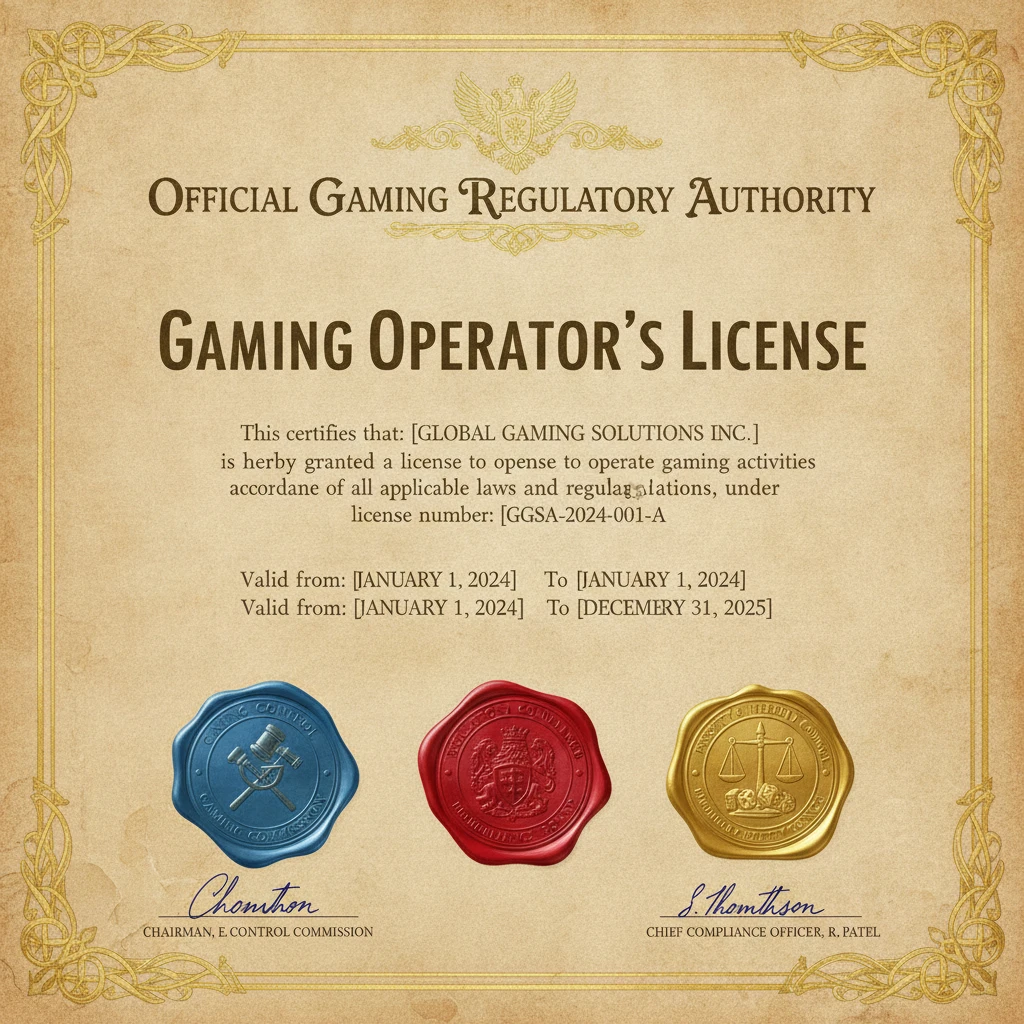
This is where your research absolutely must begin: verifying that the bitcoin casino holds a legitimate gambling license. I can't stress this enough. Playing at an unlicensed casino is gambling in the worst possible sense—you have zero recourse if they refuse to pay your winnings, manipulate games, or just vanish with your funds.
There's a hierarchy to gambling licenses. At the top tier, you've got licenses from jurisdictions like the UK Gambling Commission, the Malta Gaming Authority, and Gibraltar. These regulatory bodies impose strict requirements on operators—regular audits, fair gaming standards, segregated player funds. If a bitcoin casino holds one of these licenses, you're dealing with a platform that's been thoroughly vetted.
Mid-tier licenses come from places like Curaçao (specifically the Curaçao eGaming license), Costa Rica, and Kahnawake. These are easier to obtain and involve less stringent oversight, but reputable operators with these licenses can still provide safe gambling environments. Curaçao is extremely common in the bitcoin casino world. It's not as rigorous as Malta or the UK, but a valid Curaçao license is better than no license at all.
Red flags appear when casinos are vague about licensing, claim to be 'licensed' without specifying the jurisdiction, or display fake license seals. I've seen fake Malta Gaming Authority logos, fabricated license numbers, complete absence of regulatory information. These are casinos to avoid entirely.
How to Verify a Casino's License
Checking a license takes a few minutes and can save you serious money and frustration. Here's my process: First, scroll to the bottom of the casino's homepage. Legitimate casinos display their license information in the footer—usually the regulatory body's logo, a license number, often a clickable seal that links to the regulator's verification page.
Second, visit the regulatory body's website directly. Don't just trust the link on the casino site—go to the official regulator's website yourself. Most regulators maintain public databases where you can search for licensed operators. The Malta Gaming Authority has a searchable registry. So does the UK Gambling Commission. For Curaçao licenses, you'll need to identify which of the four Curaçao license holders issued the license and check their validation page.
Third, verify that the license is current and that the casino's operating details match what's registered. Check that the license holder's name matches the casino operator, that the license hasn't expired, and that there are no sanctions or warnings posted.
If you can't find clear licensing information, or if the license can't be verified through official channels, walk away. There are plenty of legitimate bitcoin casinos—there's no reason to risk your money on questionable operators.
Security Features Every Bitcoin Casino Should Have
Beyond licensing, the technical security measures a bitcoin casino implements tell you a lot about how seriously they take player protection. In 2026, certain features should be standard, not optional.
SSL encryption is non-negotiable. When you visit the casino's website, look for the padlock icon in your browser's address bar and make sure the URL begins with 'https' rather than 'http'. This encrypts all data transmitted between your device and the casino's servers—your login credentials, wallet addresses, personal information—protecting it from interception.
Two-factor authentication (2FA) should be available for your account. This adds a second layer of security beyond just your password, typically requiring a code from an authentication app or sent to your phone. I enable 2FA on every casino account I create. It's prevented unauthorized access attempts on multiple occasions.
How the casino stores player funds matters enormously. Reputable bitcoin casinos use cold wallet storage for the majority of player balances—keeping funds offline and away from potential hacks. They maintain hot wallets (online wallets) only for the amounts needed to process immediate withdrawals. Ask about their wallet security practices, and be wary of casinos that won't discuss this transparently.
Smart contract audits are increasingly important for casinos operating on blockchain platforms like Ethereum. If the casino uses smart contracts for games or fund management, those contracts should be audited by reputable blockchain security firms. Look for audit reports from companies like CertiK, Quantstamp, or OpenZeppelin.
Provably Fair Technology Explained
Here's where bitcoin casinos can actually surpass traditional online casinos in transparency: provably fair technology. This cryptographic method allows you to verify that game outcomes weren't manipulated by the casino.
In a provably fair system, the casino generates a random seed before each game round and provides you with a hashed version of that seed. You also contribute a seed (client seed), and these combine with a nonce (a number that increases with each bet) to determine the outcome. After the game concludes, the casino reveals the original server seed, and you can verify using third-party tools that the outcome was indeed determined by these seeds and wasn't manipulated.
Not all bitcoin casino games are provably fair—table games with live dealers obviously can't use this technology. But for slots, dice games, and other RNG-based games, provably fair is the gold standard. I prioritize casinos that implement this tech and make verification tools readily accessible. It's the closest thing we have to transparent, verifiable fairness in online gambling.
Evaluating Game Selection and Software Providers
The games a bitcoin casino offers and who provides them signal the casino's legitimacy. Established software providers like Evolution Gaming, Pragmatic Play, NetEnt, and Microgaming don't partner with just anyone. They have reputational standards and won't supply games to unlicensed or shady operators.
When I evaluate a new bitcoin casino, I look at their game lobby and note which providers are represented. If I see names I recognize from reputable casinos, that's a positive sign. If the games are all from unknown providers or the casino operates its own proprietary games without any recognizable names, I proceed with extreme caution.
Game variety matters for practical reasons too. A casino offering only a handful of slots probably isn't a serious operation. Legitimate casinos in 2026 typically offer hundreds of slots, table games like blackjack and roulette, live dealer options, and increasingly, crash games and other crypto-native gambling formats.
Check whether the casino provides RNG (Random Number Generator) information and certificates. Reputable software providers have their RNG systems tested and certified by independent labs like eCOGRA, iTech Labs, or Gaming Laboratories International. These certificates should be recent—look for certification within the past year.
Payment Methods, Withdrawal Speeds, and Hidden Fees
One of the main reasons we choose bitcoin casinos is the payment experience, so this aspect deserves careful scrutiny. First, check which cryptocurrencies the casino accepts. In 2026, most legitimate operations support multiple coins beyond just Bitcoin—Ethereum, Litecoin, Bitcoin Cash, Tether, USDC are common.
Supporting multiple cryptocurrencies gives you flexibility to choose based on transaction fees and speed. When Bitcoin network fees are high, being able to deposit with Litecoin or use a stablecoin can save you money. Casinos stuck supporting only Bitcoin might be technologically behind the curve.
Withdrawal speeds are where bitcoin casinos should shine. I expect cryptocurrency withdrawals to be processed within 24 hours, with many casinos processing them within a few hours. If a bitcoin casino takes three to five days to process crypto withdrawals, they're negating the main advantage of cryptocurrency and raising questions about liquidity or competence.
Scrutinize the withdrawal limits and any associated fees. Minimum withdrawal amounts should be reasonable—typically 0.001 to 0.005 BTC or equivalent. Minimums significantly higher than this can trap smaller players. Maximum withdrawal limits vary, but be wary of casinos that cap daily or weekly withdrawals unusually low, as this could indicate cashflow problems.
Transaction fees are another consideration. Some casinos cover blockchain network fees for withdrawals, while others pass them to players. Neither approach is inherently wrong, but it should be clearly stated in the terms. Hidden fees—like 'processing fees' or 'conversion fees' on top of network fees—are red flags.
Bonuses, Wagering Requirements, and Fair Terms
Bitcoin casino bonuses can be generous, but they're also where players most commonly get trapped by unfair terms. I've learned to read bonus terms carefully before accepting any offer, and I'd encourage you to do the same.
Wagering requirements define how many times you must bet the bonus amount before you can withdraw winnings. In 2026, reasonable wagering requirements for bitcoin casinos range from 30x to 40x the bonus amount. Anything above 50x is excessive and makes the bonus nearly impossible to clear. I've seen requirements as high as 70x or 80x—these are essentially worthless bonuses designed to look attractive while being practically unclaimable.
Pay attention to game weightings. Not all games contribute equally to wagering requirements. Slots typically contribute 100%, but table games might contribute only 10% or 20%, and some games might be excluded entirely. If you primarily play blackjack, a bonus with 10% table game weighting effectively means you have 400x wagering instead of 40x.
Maximum bet restrictions while clearing bonuses are standard—typically capped at $5 to $10 per spin or hand. Violating these limits, even accidentally, can void your bonus and any winnings. The problem is when casinos don't enforce these limits technically in their software, allowing you to accidentally place larger bets and then claiming you violated terms.
Time limits for clearing bonuses should be reasonable—typically 30 days. Seven-day time limits on large bonuses with high wagering requirements are designed to fail. Also watch for maximum withdrawal caps on bonus winnings. Some casinos cap bonus withdrawals at 10x the bonus amount, meaning even if you win $10,000 while clearing a $100 bonus, you can only withdraw $1,000.
Customer Support and Responsible Gambling Tools
Quality customer support indicates a casino's commitment to player experience. In 2026, I expect live chat support available 24/7, with response times under a few minutes for initial contact. Email support should respond within 24 hours. Phone support is less common at crypto casinos but is a nice bonus when available.
Test the support before depositing. Ask a question via live chat about licensing or withdrawal procedures. The quality and speed of the response tell you what to expect if you encounter real problems later. Knowledgeable, professional, prompt support suggests a well-run operation. Slow, unhelpful, or evasive responses are warning signs.
Responsible gambling tools aren't just nice-to-have features—they're indicators of a legitimate operation that views players as long-term customers rather than quick profit sources. Look for deposit limits (daily, weekly, monthly), loss limits, session time limits, reality check reminders, and self-exclusion options.
Self-exclusion, in particular, should be readily accessible and honored across all the operator's brands if they run multiple casinos. The process should be clearly explained, and the casino should provide resources for problem gambling help, including links to organizations like the Responsible Gambling Council or Gamblers Anonymous.
In my experience, casinos that prominently feature responsible gambling tools and make them easy to use are more likely to be trustworthy overall. It demonstrates they're thinking long-term and care about sustainable, healthy gambling rather than extracting maximum value from players as quickly as possible.
Conclusion
Choosing the best bitcoin casino in Canada in 2026 requires diligence, but it's time well spent. The crypto gambling landscape offers genuine advantages—faster payments, enhanced privacy, access to a global gaming ecosystem—but these benefits only materialize when you're playing at legitimate, secure platforms.
Start with licensing verification. Confirm the casino holds a valid gambling license from a recognized regulatory authority and that you can verify this license through official channels. Examine the security features—SSL encryption, 2FA, cold wallet storage, provably fair technology where applicable. Evaluate the game selection and software providers to ensure you're playing quality, verified games.
Scrutinize payment terms, including supported cryptocurrencies, withdrawal speeds, and any fees. Read bonus terms carefully, focusing on wagering requirements, game weightings, and maximum bet restrictions. Test customer support and verify that responsible gambling tools are available and functional.
As a Canadian player, you've got access to numerous bitcoin casinos, but not all of them deserve your business or your trust. Take your time researching before you deposit. Ask questions, verify claims, and trust your instincts—if something feels off, there are plenty of other options. The informed gambling decisions you make today will determine whether your crypto casino experience is enjoyable and secure or frustrating and costly. In the evolving landscape of 2026, knowledge is your best protection and your greatest advantage.